Most companies set up a DMARC record and call it done. The problem is that publishing the record is only half the job — and ignoring the other half is how you end up with attackers sending phishing emails to your customers using your domain while you have no idea it’s happening.
What DMARC Actually Does
DMARC (Domain-based Message Authentication, Reporting, and Conformance) is the standard that integrates SPF and DKIM. SPF tells the world which mail servers are allowed to send email for your domain. DKIM cryptographically signs outgoing messages so receivers can verify they haven’t been tampered with. DMARC enforces both, and — this is the part most people miss — requests daily reports from every major mail provider telling you exactly what’s being sent in your name.
Google, Microsoft, Yahoo, Apple, and others will all send you these reports automatically once your DMARC record is in place. The catch is that they arrive as gzip-compressed XML files. They’re not designed to be read by humans, and most IT teams end up ignoring them entirely.
Why That’s a Problem
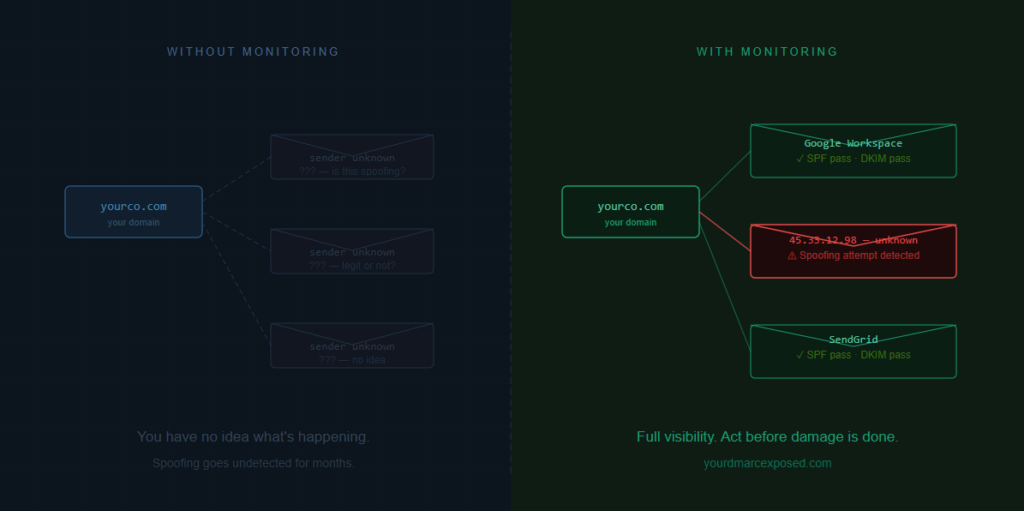
Those reports contain everything you need to know about your email security posture. When you’re not reading them, you’re missing things like:
- Attackers are actively spoofing your domain in phishing campaigns against your customers
- Marketing tools and CRMs are sending emails on your behalf that aren’t listed in your SPF record
- Third-party services with broken DKIM are causing legitimate emails to land in spam
- Email forwarding silently failing DMARC and getting rejected at the destination
None of these problems are obvious. They don’t generate alerts. They just keep happening until someone notices — usually a customer.
What We Built to Fix It
A while back, we built Your DMARC Explained to solve this problem. The service collects your DMARC aggregate reports, parses the XML, and shows you everything in a dashboard — every sending source, authentication pass and fail rates, and anything that looks like spoofing or misconfiguration.
You don’t need to understand DNS to use it. If something is wrong, you’ll see it. If an attacker is spoofing your domain, you’ll see the source IPs, the volume, and which mail providers are receiving the spoofed messages.
The service also sends a nightly digest to your IT team so failures don’t go unnoticed overnight. One customer told me it let them respond to a mail delivery problem before their users even knew there was an issue. Another used it to quickly identify an SPF misconfiguration they didn’t know they had.
Getting Started
Setup takes about five minutes. Create an account, add a DNS verification record to prove domain ownership, and update your DMARC record to include the reporting address. Within 24 hours, reports start flowing in.
There’s a free trial with no credit card required. Head over to yourdmarcexposed.com and take a look.
Denny