
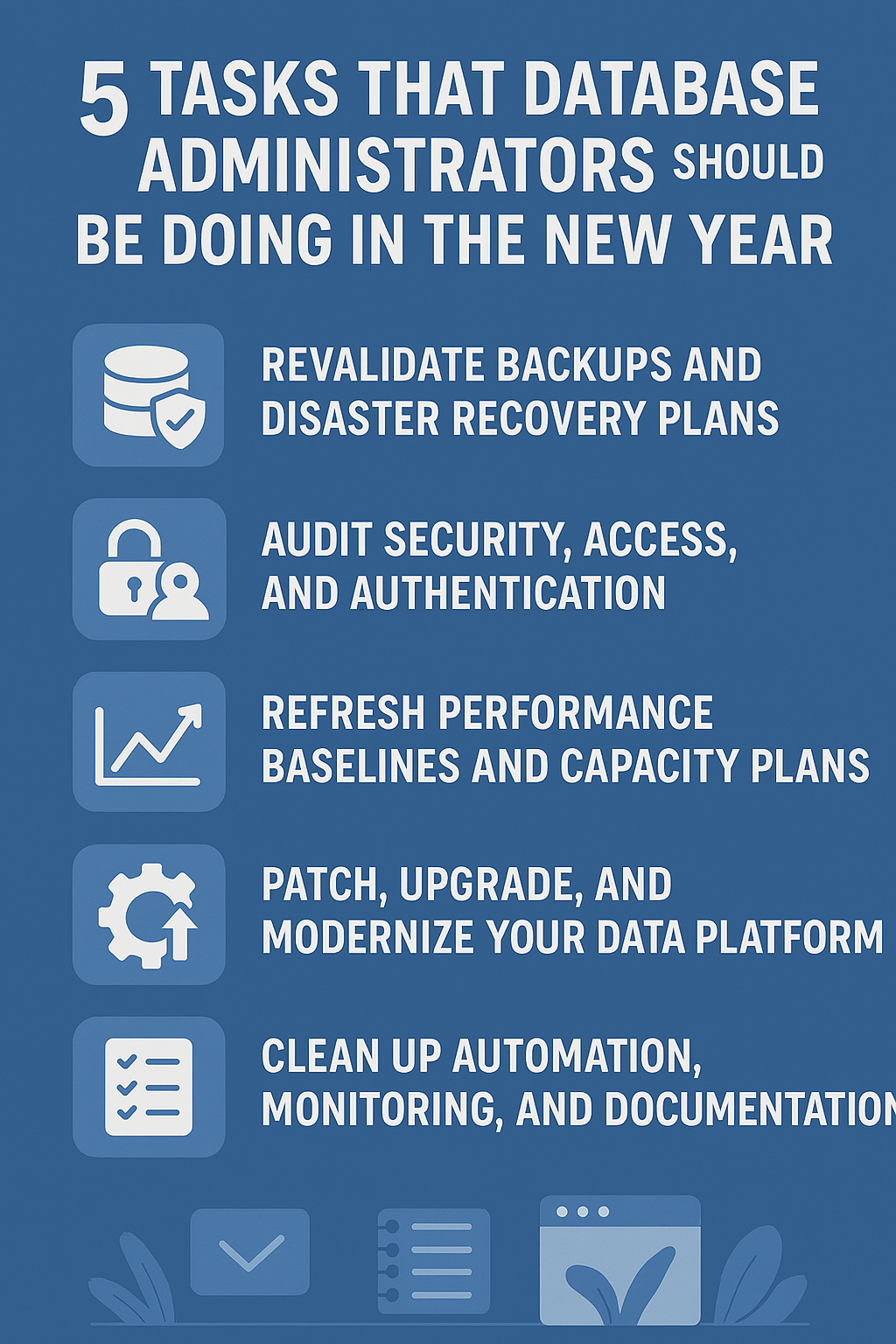
The start of a new year is always a natural reset point — a chance for DBAs to step back from the daily fire drills and invest in the long‑term health of their data platforms. Whether you manage a sprawling SQL Server estate, a hybrid cloud footprint, or a handful of mission‑critical workloads, these five tasks help ensure your environment is ready for whatever the next twelve months bring.
1. Revalidate Your Backups and Disaster Recovery Plans
Backups that exist aren’t the same as backups that work. The new year is the perfect moment to:
- Perform full restore tests on every critical database
- Validate RPO/RTO assumptions with the business
- Confirm that off-site and immutable backup storage is functioning
- Review failover runbooks for accuracy and missing steps
It’s amazing how often a restore test uncovers silent failures—expired credentials, broken jobs, missing encryption keys, or undocumented storage changes.
2. Audit Security, Access, and Authentication
Security posture drifts over time. People change roles, applications evolve, and permissions accumulate. Start the year by tightening things up:
- Review all logins, roles, and group memberships
- Remove unused accounts and stale service principals
- Reconfirm password rotation and certificate expiration timelines
- Validate auditing is enabled and capturing what you expect
If you’re using Azure AD, Entra ID, or hybrid authentication, this is also a good time to ensure your identity integrations are still aligned with your application’s needs.
3. Refresh Performance Baselines and Capacity Plans
Last year’s workload patterns don’t always predict this year’s. New applications, seasonal shifts, and architectural changes can all reshape performance expectations.
Kick off the year by:
- Capturing fresh baselines for CPU, memory, IO, and wait stats
- Reviewing Query Store trends and identifying regressions
- Reassessing storage throughput and latency
- Updating capacity forecasts for growth
A clean baseline now makes troubleshooting in June or October dramatically easier.
4. Patch, Upgrade, and Modernize Your Data Platform
Technical debt doesn’t disappear on its own. The new year is an excellent time to:
- Apply cumulative updates and security patches
- Review end‑of‑support timelines for SQL Server versions
- Evaluate whether older instances can be consolidated or retired
- Revisit cloud migration or modernization plans
Even minor upgrades — like enabling Accelerated Database Recovery or adopting new Query Store features — can deliver outsized benefits.
5. Clean Up Automation, Monitoring, and Documentation
Every DBA has scripts, alerts, and dashboards that were “temporary” but somehow became permanent. Use the new year to clean house:
- Remove noisy or irrelevant alerts
- Update monitoring thresholds based on new baselines
- Refactor automation scripts for clarity and reliability
- Refresh documentation so it reflects reality, not history
A tidy operational environment reduces cognitive load and makes onboarding new team members far easier.
Final Thoughts
The new year isn’t just a symbolic milestone — it’s a strategic opportunity. By investing time in these five areas, DBAs can strengthen reliability, reduce risk, and set the stage for smoother operations throughout the new year.
Denny